Central air and ductless cooling systems both deliver reliable home comfort, but their fit depends on your US home’s layout, size, and budget. Central systems cool entire homes uniformly via ducts, while ductless mini-splits target zones without ductwork, offering flexibility for additions or older properties.
Central Air Systems
Central air uses a single outdoor condenser paired with an indoor furnace or air handler, distributing cooled air through existing ductwork vents. Ideal for new or larger homes (1,500+ sq ft) with ducts already in place, it maintains consistent temperatures and integrates seamlessly with heating.
Efficiency reaches 16-21 SEER in modern units, but duct leaks can waste 20-30% of energy. Installation costs $3,000-$7,000 if ducts exist, rising to $10,000+ without. Annual maintenance—filter changes, duct sealing—keeps performance high.
Ductless Mini-Split Systems
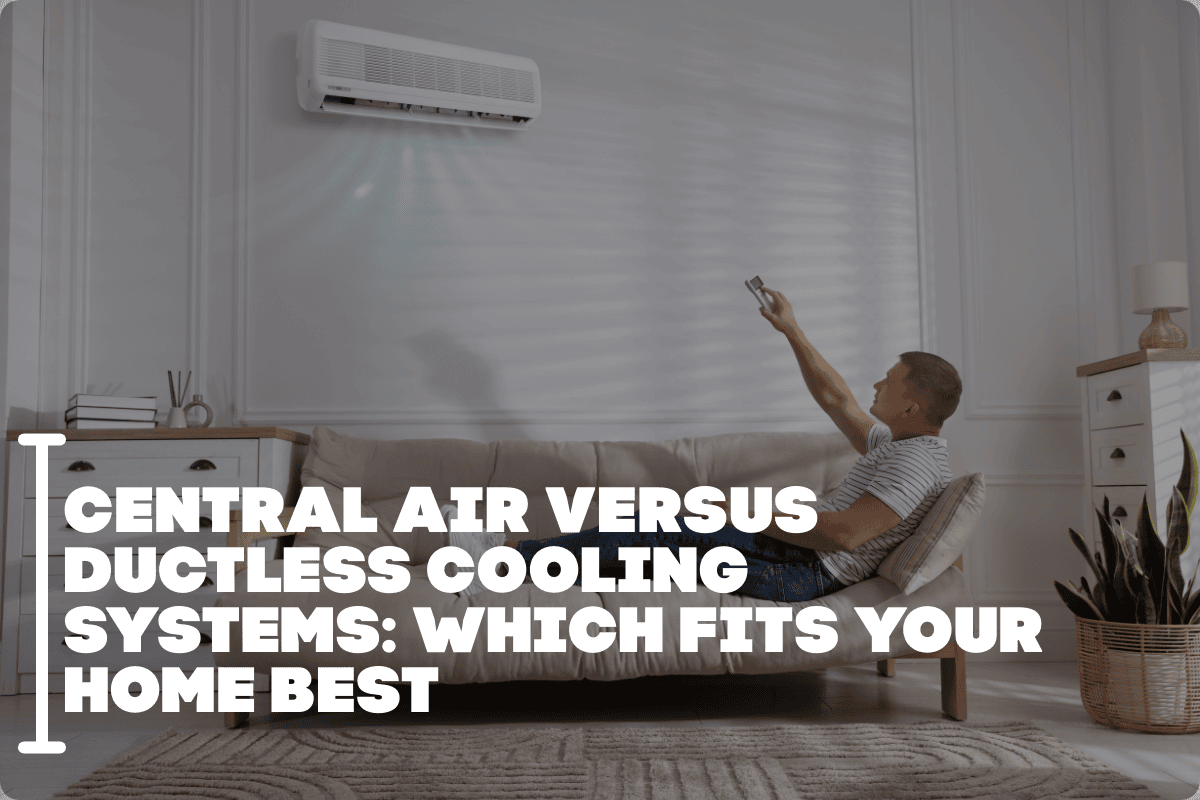
Ductless setups feature one outdoor unit linked to 1-8 indoor wall-mounted heads, each with its own thermostat for zoned cooling. Perfect for homes without ducts, renovations, or spot-cooling garages/sunrooms, they avoid energy loss entirely.
Higher efficiency (up to 27+ SEER) yields 30-40% savings, plus heating capability via heat pumps. Single-zone starts at $2,000; multi-zone $5,000-$15,000. Minimal maintenance focuses on filters and annual pro checks.
Key Comparison Factors
Data reflects 2026 national averages; tax credits up to $2,000 favor high-SEER ductless.
Pros and Cons
Central Pros: Uniform cooling, quiet operation, boosts resale value, humidity control via whole-house filters.
Central Cons: Duct inefficiencies, invasive installs, higher upfront if no ducts.
Ductless Pros: Zoned savings (cool only used rooms), easy retrofits (3-inch wall hole), dual heat/cool, quieter indoors.
Ductless Cons: Visible heads, higher per-zone cost, pro install required.
For humid Southern homes, central excels in dehumidification; arid West favors ductless precision.
Installation Considerations
Assess ducts first: Leaky ones tip scales to ductless. Load calculations (Manual J) ensure sizing—undersized strains, oversized short-cycles. Pros handle refrigerant lines; DIY risks void warranties. In multi-story homes, ductless avoids vertical duct runs losing efficiency.
Hybrid setups combine both: Central base + ductless supplements. ENERGY STAR models qualify for rebates under Inflation Reduction Act extensions.
Cost of Ownership
Central: $500/year electric (2,000 sq ft), $150 maintenance. Ductless: $300-$400/year, $100 upkeep—ROI in 3-5 years via savings. Longevity: Both 15-20 years with care.
Zone-heavy families save most with ductless; uniform needs suit central.
Choosing the Right Fit
New builds or ducted colonials? Central. Historic homes, apartments, or sunrooms? Ductless. Get 2-3 pro quotes with energy audits for tailored advice.
Both excel in 2026’s efficient era—pick based on your home’s bones for optimal comfort and savings.
FAQs
1. No ducts—go ductless?
Yes, far cheaper and less disruptive than adding ducts.
2. Which is quieter?
Ductless indoors; central overall if ducts sealed.
3. Heating too?
Ductless heat pumps standard; central pairs with furnace.
4. Efficiency edge?
Ductless wins by avoiding losses; verify SEER ratings.
5. Resale impact?
Central adds broad appeal; ductless shines in retrofits.