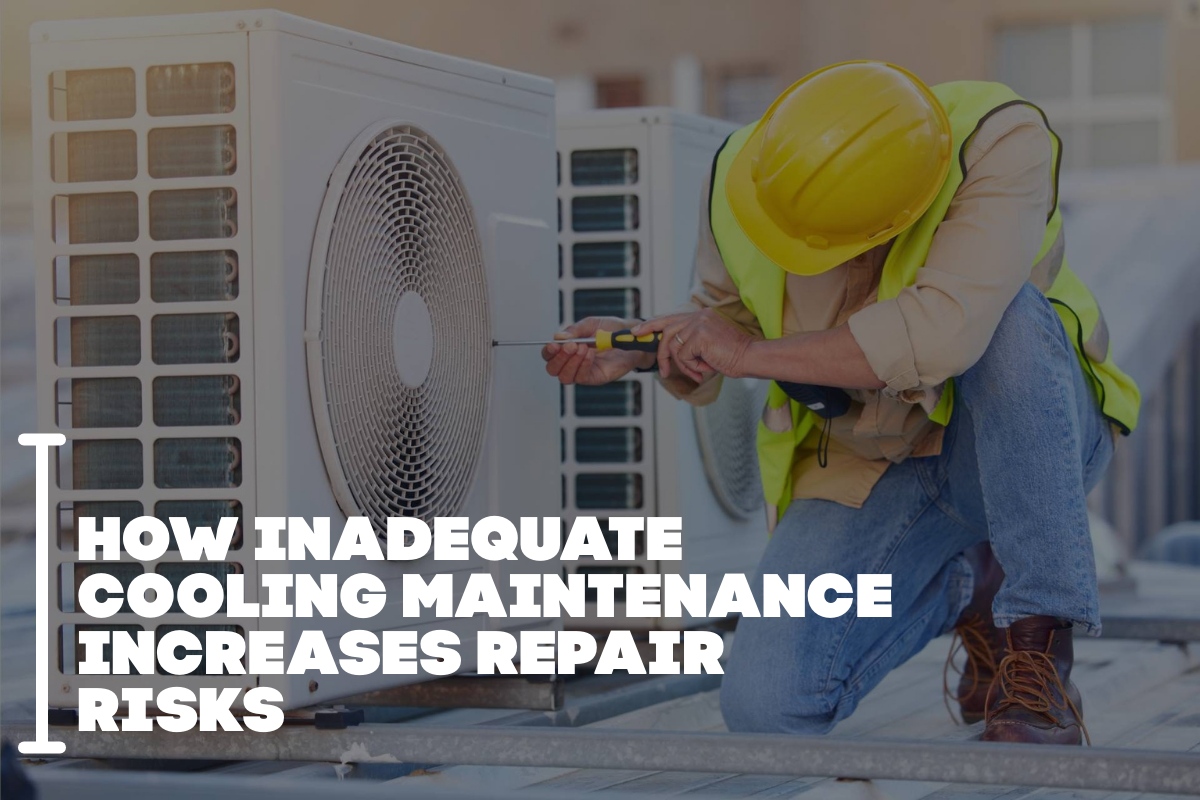
Air conditioning systems are designed to operate reliably through long, hot seasons—but only when they’re properly maintained. When routine cooling maintenance is neglected, small inefficiencies quietly snowball into serious mechanical problems. What often starts as reduced comfort or slightly higher energy bills can quickly turn into unexpected breakdowns, costly repairs, and shortened equipment lifespan.
Understanding how inadequate maintenance increases repair risks helps homeowners see why prevention is far less expensive—and far less stressful—than emergency fixes.
Small Issues Turn Into Major Failures
Cooling systems rely on a balance of airflow, refrigerant levels, electrical components, and heat transfer. When maintenance is skipped, dirt buildup, loose connections, or minor wear go unchecked. These small problems force the system to work harder to achieve the same cooling output.
Over time, this added strain accelerates component failure. A dirty coil can cause overheating, which stresses compressors. Restricted airflow can damage blower motors. What could have been corrected with simple cleaning or adjustment often becomes a major repair because the system was allowed to operate under constant stress.
Dirty Components Create System-Wide Strain
One of the most common consequences of poor maintenance is dirt accumulation. Dust and debris clog air filters, coat evaporator coils, and surround outdoor condenser units. When airflow is restricted, heat cannot transfer efficiently, forcing the system to run longer and cycle more frequently.
This excessive runtime increases wear on motors, capacitors, and electrical connections. It also raises internal temperatures, which shortens the lifespan of sensitive components. Dirty systems don’t just cool poorly—they actively damage themselves while trying.
Refrigerant Problems Go Undetected
Low or improperly balanced refrigerant levels are another major risk factor. Without regular inspections, small leaks may go unnoticed for months. Low refrigerant forces the compressor to work harder, raising pressure and temperature inside the system.
Compressors are among the most expensive components to replace. Running a system with low refrigerant dramatically increases the chance of compressor failure, turning what could have been a manageable repair into a costly system-threatening issue.
Electrical Wear Becomes a Breakdown Risk
Cooling systems depend on capacitors, contactors, wiring, and control boards to operate safely. Over time, electrical connections loosen, components weaken, and voltage imbalances develop. Routine maintenance identifies these issues early.
Without maintenance, failing electrical parts can cause hard starts, erratic cycling, or complete system shutdowns. Electrical failures often happen suddenly, leaving homeowners without cooling during the hottest days—when repair demand and costs are highest.
Moisture and Drainage Issues Cause Hidden Damage
Air conditioners remove moisture from indoor air, directing it safely away through condensate drain lines. When maintenance is inadequate, these drains can clog with algae or debris. Blocked drainage leads to water backups, which can damage internal components, promote mold growth, and cause leaks inside the home.
Moisture-related damage often goes unnoticed until ceilings stain, odors develop, or system performance drops significantly—by which point repairs are more extensive and disruptive.
Short Cycling Accelerates Component Failure
Poor maintenance frequently leads to short cycling, where the system turns on and off too frequently. This can be caused by dirty sensors, airflow problems, or refrigerant imbalance. Short cycling places extreme stress on compressors and electrical components, increasing failure rates.
Each startup requires a surge of energy. When a system starts repeatedly throughout the hour, wear accumulates rapidly, dramatically increasing repair risk.
Emergency Repairs Cost More—and Happen at the Worst Time
Systems without regular maintenance are far more likely to fail during peak cooling season. Emergency repairs typically cost more due to urgency, limited technician availability, and after-hours service charges. In some cases, neglected systems fail so severely that repair is no longer cost-effective, forcing premature replacement.
Routine maintenance reduces the likelihood of these scenarios by keeping systems stable and predictable.
FAQs
Can skipping maintenance really cause major repairs?
Yes. Minor issues like dirt buildup or loose connections often lead directly to major component failures when left unaddressed.
What parts are most at risk without maintenance?
Compressors, blower motors, capacitors, coils, and electrical controls are especially vulnerable to neglect.
Does poor maintenance affect energy bills too?
Absolutely. Inefficient systems run longer and consume more energy, increasing monthly cooling costs.
How often should cooling systems be serviced?
Most systems should be professionally serviced once a year, ideally before peak cooling season.
Is maintenance still important if the system seems to work fine?
Yes. Many damaging problems develop silently before performance noticeably declines.
Can maintenance really reduce emergency breakdowns?
Yes. Regular inspections and tune-ups significantly lower the risk of unexpected failures.