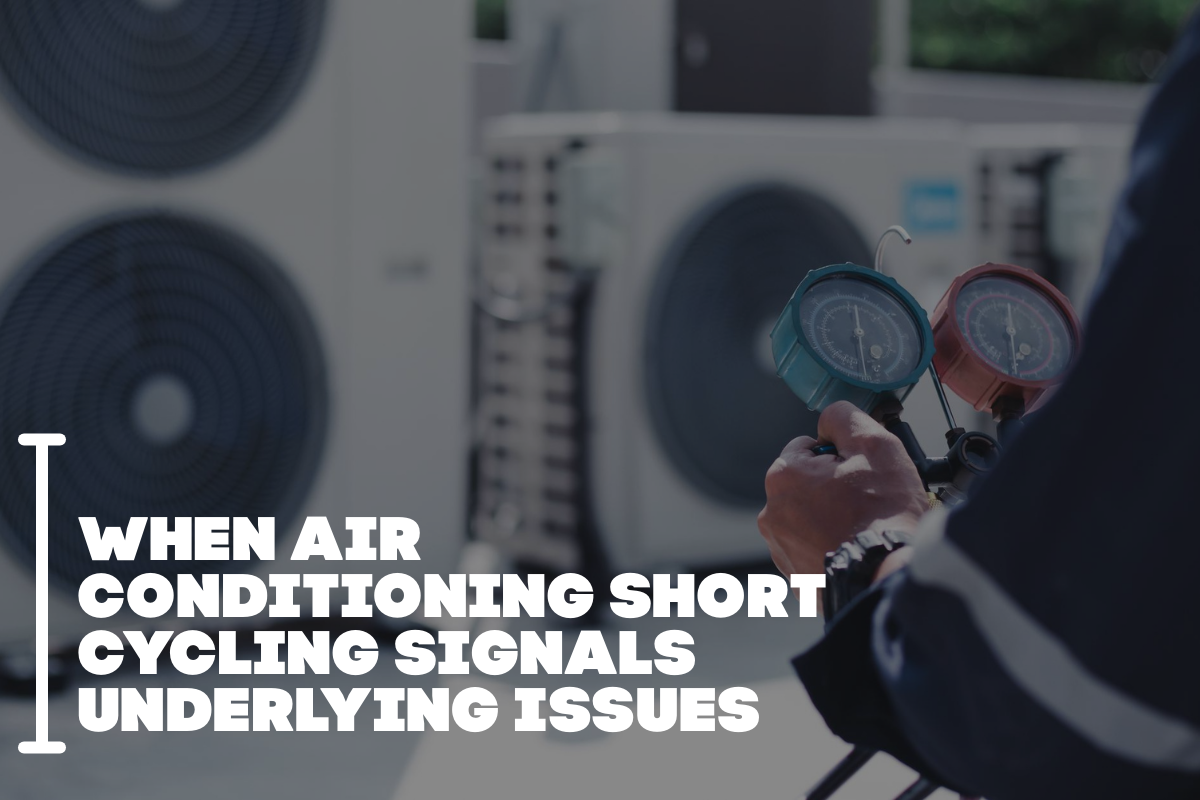
Air conditioning systems are designed to run in steady cycles that efficiently cool your home. When an AC unit turns on and off frequently without completing a full cooling cycle—a condition known as short cycling—it often signals underlying mechanical or system issues. Ignoring short cycling can increase energy costs, reduce comfort, and lead to premature equipment failure.
What Is Short Cycling?
Short cycling occurs when an air conditioning system starts, runs briefly (often less than 10 minutes), then shuts off before reaching the desired indoor temperature. The system may restart shortly afterward, repeating the pattern multiple times per hour.
Under normal operation, AC systems should complete longer cycles that evenly cool indoor spaces and regulate humidity.
Why Short Cycling Is a Concern
Frequent cycling places excessive stress on system components, especially the compressor. Over time, this can result in:
- Increased electricity consumption
- Uneven cooling
- Higher indoor humidity
- Premature compressor failure
- Reduced equipment lifespan
Addressing the issue early prevents costly repairs or full system replacement.
Common Causes of AC Short Cycling
Several underlying problems may cause short cycling. Identifying the source is essential for proper repair.
1. Thermostat Problems
Improper thermostat placement—such as near windows, vents, or heat sources—can cause inaccurate temperature readings. A malfunctioning thermostat may also miscommunicate with the system.
| Thermostat Issue | Effect on AC |
|---|---|
| Poor placement | False temperature readings |
| Wiring faults | Erratic system behavior |
| Calibration errors | Premature shutdown |
Upgrading to a properly installed smart thermostat may improve system performance.
2. Dirty or Clogged Air Filters
Restricted airflow from clogged filters can cause the system to overheat and shut down prematurely.
Signs include:
- Weak airflow
- Ice buildup on coils
- Increased indoor dust
Regular filter replacement is one of the simplest preventive measures.
3. Refrigerant Leaks
Low refrigerant levels reduce cooling efficiency and can cause the evaporator coil to freeze. When the system shuts off to prevent damage, short cycling may occur.
| Refrigerant Issue | Result |
|---|---|
| Low charge | Reduced cooling capacity |
| Coil freezing | System shutdown |
| Pressure imbalance | Compressor strain |
Refrigerant problems require professional repair.
4. Oversized Air Conditioning Unit
An AC system that is too large for the home cools the space too quickly and shuts off before completing a full cycle. While this may sound efficient, it leads to poor humidity control and frequent restarts.
Proper load calculation during installation ensures correct system sizing.
5. Electrical or Compressor Issues
Electrical malfunctions or failing compressors can trigger automatic shutdowns. Since the compressor is the most expensive component, short cycling should never be ignored.
Environmental and Climate Factors
In hot, humid regions, AC systems work harder and may cycle more frequently if improperly maintained. In areas like the Midwestern United States, fluctuating seasonal temperatures can also stress HVAC systems during transitional months.
Proper insulation and sealed ductwork help stabilize indoor temperatures and reduce unnecessary cycling.
Warning Signs to Watch For
Homeowners should monitor for:
- AC turning on and off every few minutes
- Increased energy bills
- Unusual clicking or buzzing sounds
- Ice on refrigerant lines
- Inconsistent indoor temperatures
Early intervention reduces long-term damage.
Preventive Maintenance Tips
Routine maintenance minimizes short cycling risks.
Recommended Maintenance Actions
- Replace air filters every 1–3 months
- Schedule annual HVAC inspections
- Clean condenser coils
- Ensure thermostat calibration
- Check refrigerant levels
- Inspect ductwork for leaks
| Maintenance Step | Benefit |
|---|---|
| Annual servicing | Detects issues early |
| Coil cleaning | Improves heat exchange |
| Duct sealing | Stabilizes airflow |
| Proper insulation | Reduces system strain |
Consistent care extends system lifespan.
When to Call a Professional
If short cycling persists after changing filters and checking thermostat settings, contact a licensed HVAC technician. Professional diagnostics can identify:
- Refrigerant leaks
- Electrical faults
- Compressor problems
- System sizing issues
Delaying service may result in more extensive damage.
FAQs
Is short cycling dangerous for my AC unit?
Yes, repeated short cycles strain the compressor and may lead to costly damage if not addressed.
Can a dirty air filter cause short cycling?
Yes, restricted airflow from clogged filters can cause overheating and frequent shutdowns.
How do I know if my AC is oversized?
If it cools the home very quickly but cycles on and off frequently, it may be oversized.
Should I repair or replace my system if short cycling continues?
If repairs are minor, repair is appropriate. Persistent or major component issues may justify replacement.
How often should HVAC systems be serviced?
At least once annually, preferably before peak cooling season.