Cooling systems are among the largest contributors to household energy consumption, especially in warm climates or during summer months. The efficiency of an air conditioning (AC) system directly affects how much electricity it uses to maintain indoor comfort.
A highly efficient system can significantly lower monthly energy bills, while an outdated or poorly maintained system can drive costs up dramatically. Understanding how cooling efficiency works allows homeowners to make informed decisions that improve comfort while reducing expenses.
What Is Cooling System Efficiency?
Cooling system efficiency refers to how effectively an air conditioning unit converts electrical energy into cooling output. Efficiency is typically measured using ratings such as:
- SEER (Seasonal Energy Efficiency Ratio)
- EER (Energy Efficiency Ratio)
- ENERGY STAR® certification
Higher ratings indicate better energy performance and lower operating costs.
How Efficiency Directly Impacts Energy Bills
When a cooling system operates efficiently, it requires less electricity to achieve the same temperature. Inefficient systems must run longer and work harder, increasing utility consumption.
Example of Energy Consumption Differences
| System Efficiency Rating | Estimated Energy Usage | Monthly Energy Cost Impact |
|---|---|---|
| Low SEER (10–13) | High consumption | Higher utility bills |
| Moderate SEER (14–16) | Balanced usage | Moderate energy cost |
| High SEER (17–20+) | Reduced consumption | Lower monthly bills |
Even a few SEER points can translate into noticeable savings over time.
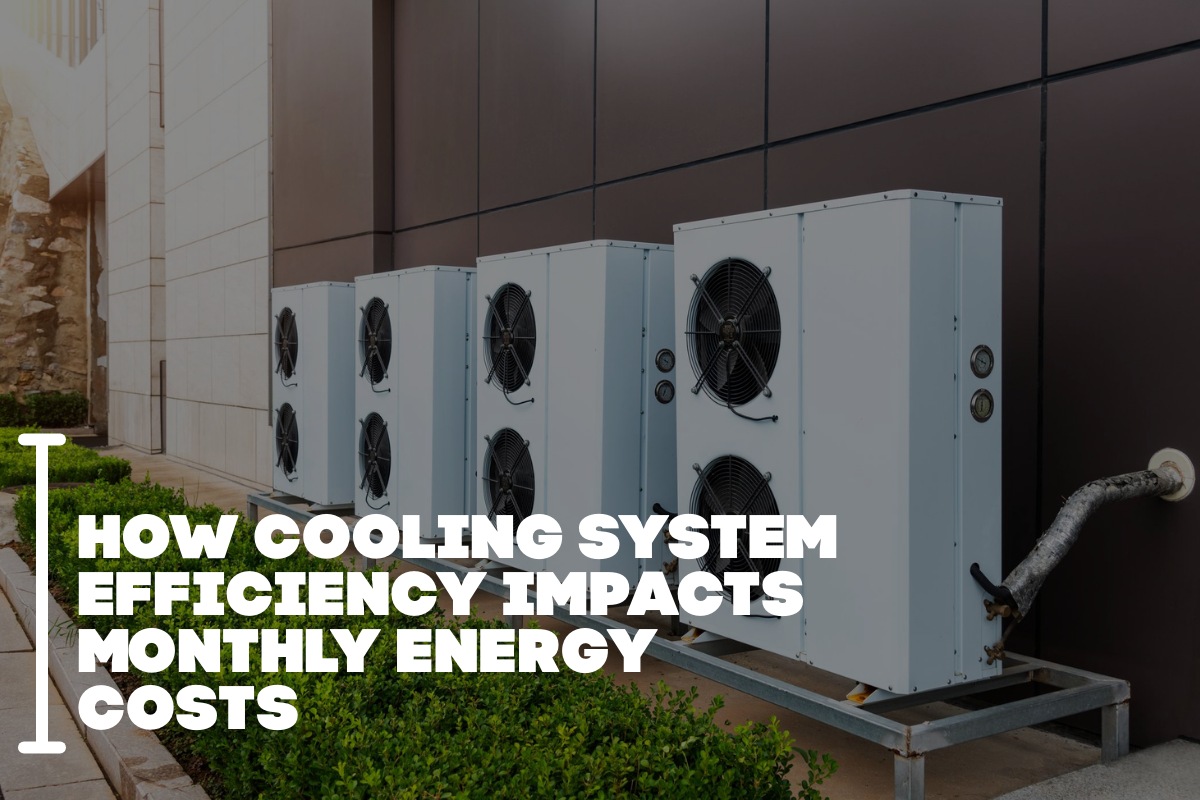
Visual Overview of Cooling System Components
Understanding these components helps identify factors that influence efficiency.
Factors That Affect Cooling Efficiency
Several variables determine how efficiently a cooling system performs:
1. Age of the System
Older systems often lack modern energy-saving technology and may operate at lower efficiency levels. Most systems last 10–15 years before performance declines significantly.
2. Maintenance and Cleanliness
Dirty filters, clogged coils, and blocked airflow reduce efficiency. Regular maintenance ensures optimal operation.
Maintenance tasks include:
- Replacing air filters
- Cleaning condenser coils
- Checking refrigerant levels
- Inspecting ductwork
Neglected systems consume more energy and cost more to operate.
3. Proper System Sizing
An oversized AC unit may short-cycle, turning on and off frequently, which wastes energy. An undersized system runs continuously, increasing electricity usage.
Proper load calculation ensures balanced cooling and cost efficiency.
4. Insulation and Home Sealing
Even the most efficient AC system struggles in poorly insulated homes. Air leaks and inadequate insulation force systems to run longer.
Improving insulation reduces cooling demand and lowers monthly costs.
Smart Technology and Energy Savings
Modern cooling systems often integrate smart thermostats and variable-speed compressors.
Benefits include:
- Automated temperature adjustments
- Reduced energy usage during off-peak hours
- Improved temperature consistency
- Real-time energy monitoring
Smart controls enhance efficiency and optimize monthly energy spending.
Long-Term Cost Savings of High-Efficiency Systems
Although high-efficiency systems may have higher upfront costs, long-term savings often outweigh the investment.
| Comparison Factor | Standard Efficiency AC | High-Efficiency AC |
|---|---|---|
| Initial Cost | Lower | Higher |
| Monthly Operating Cost | Higher | Lower |
| Energy Savings Over Time | Limited | Significant |
| Environmental Impact | Higher emissions | Reduced emissions |
Over several years, energy-efficient systems can substantially reduce total operating expenses.
Environmental Impact and Sustainability
Improved cooling efficiency not only lowers energy bills but also reduces carbon emissions. Lower electricity consumption decreases the demand on power plants, contributing to environmental sustainability.
Energy-efficient systems:
- Use less electricity
- Lower greenhouse gas emissions
- Support eco-friendly living
Sustainability and cost savings often go hand in hand.
Warning Signs of Reduced Efficiency
Homeowners should watch for:
- Rising energy bills without increased usage
- Uneven cooling
- Frequent cycling
- Unusual noises
- Excess humidity indoors
These symptoms may indicate declining efficiency.
FAQs
1. What does SEER mean in air conditioning systems?
SEER stands for Seasonal Energy Efficiency Ratio and measures how efficiently an AC system operates over a cooling season.
2. How much can upgrading to a high-efficiency AC save?
Savings vary by usage and climate but can reduce energy bills by 20–40% compared to older systems.
3. How often should AC filters be replaced?
Filters should typically be replaced every 1–3 months depending on usage and air quality.
4. Does insulation affect cooling costs?
Yes, proper insulation reduces heat gain, lowering the workload on cooling systems.
5. When should I consider replacing my cooling system?
If your unit is over 10–15 years old and energy bills are rising, replacement may be more cost-effective than frequent repairs.