Selecting the right air conditioning system for your home is a major decision that affects comfort, energy efficiency, and long-term costs. Two of the most popular options today are ductless mini-split systems and central air conditioning. While both provide effective cooling, they work very differently and are suited to different home layouts, budgets, and comfort preferences. Understanding the key differences will help you make a confident, informed choice.
Understanding Central Air Conditioning
Central air conditioning is the traditional cooling system found in many homes. It uses a single outdoor unit connected to an indoor coil and blower, distributing cooled air throughout the house via ductwork.
How Central AC Works
Cooled air is pushed through a network of ducts and released into rooms through vents. A single thermostat controls the temperature for the entire home or zones if zoning equipment is installed.
Pros of Central Air Conditioning
- Provides consistent cooling throughout the entire house
- Cleaner appearance with no wall-mounted indoor units
- Often increases home resale value
- Works well in homes that already have ductwork
Cons of Central Air Conditioning
- High installation cost if ductwork is not present
- Energy loss through leaky or poorly insulated ducts
- Less flexibility for room-by-room temperature control
Understanding Ductless Mini-Split Systems
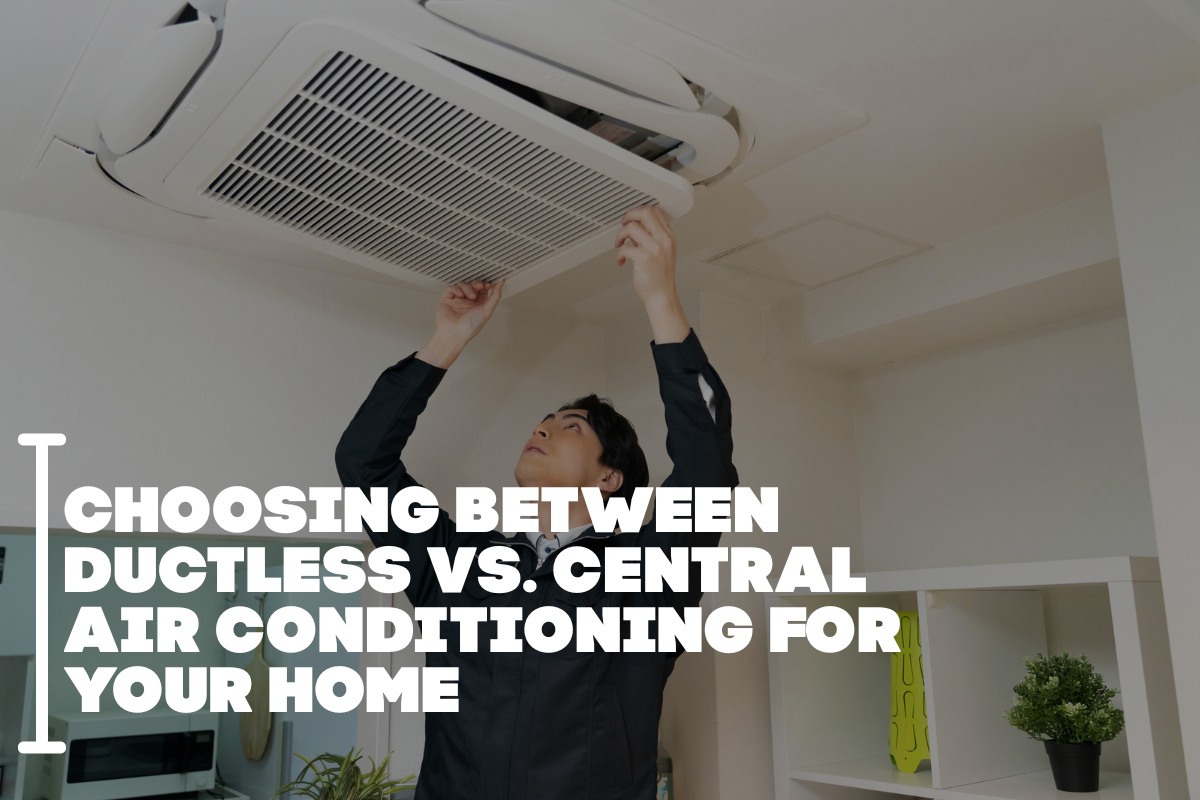
Ductless systems consist of an outdoor compressor and one or more indoor air-handling units mounted on walls or ceilings. Each indoor unit cools a specific room or zone.
How Ductless AC Works
Refrigerant lines connect the outdoor unit to indoor units, eliminating the need for ductwork. Each zone can be controlled independently using a remote or wall-mounted thermostat.
Pros of Ductless Air Conditioning
- No ductwork required, making it ideal for older homes or additions
- High energy efficiency with minimal cooling loss
- Individual temperature control for each room
- Easier and faster installation
Cons of Ductless Air Conditioning
- Higher upfront cost per room compared to central systems
- Indoor units are visible and may affect aesthetics
- Multiple indoor units may be needed for whole-home cooling
Energy Efficiency Comparison
Energy efficiency is a major factor for homeowners concerned about utility bills. Ductless systems are generally more efficient because they avoid duct losses, which can account for up to 30% of energy use in central systems. Many ductless units also use inverter technology, allowing them to adjust output rather than turning on and off repeatedly.
Central air systems can still be efficient, especially newer models with high SEER ratings and well-sealed ductwork. However, efficiency largely depends on proper installation and maintenance.
Installation and Cost Considerations
Central Air Conditioning Installation
- Less expensive if ductwork already exists
- More disruptive and costly if ducts must be added or repaired
- Best suited for new construction or homes with forced-air heating
Ductless System Installation
- Minimal structural changes required
- Ideal for home additions, converted garages, and older homes
- Costs increase with the number of indoor units needed
While ductless systems often cost more initially for whole-home setups, their energy savings and zoning capabilities can offset costs over time.
Comfort and Temperature Control
Central air conditioning provides uniform cooling, which many homeowners appreciate. However, it can lead to uneven temperatures in multi-story homes or rooms far from the thermostat.
Ductless systems excel in personalized comfort. Each room can be set to a different temperature, making them perfect for households with varying comfort preferences or rooms that heat up differently.
Maintenance and Longevity
Both systems require regular maintenance to operate efficiently.
- Central AC needs filter changes, duct inspections, and annual professional servicing.
- Ductless systems require cleaning of indoor unit filters and periodic professional maintenance.
Ductless systems often last slightly longer due to less strain and fewer moving parts, especially when well maintained.
Which System Is Right for Your Home?
Choose central air conditioning if:
- Your home already has ductwork
- You want discreet cooling with minimal indoor equipment
- You prefer one system controlling the entire house
Choose ductless air conditioning if:
- Your home lacks ductwork
- You want room-by-room temperature control
- You’re cooling an addition or specific areas
- Energy efficiency is a top priority
Frequently Asked Questions
Q. Is ductless air conditioning better than central air?
Neither system is universally better. Ductless systems offer superior efficiency and zoning, while central air is better for whole-home cooling with existing ductwork.
Q. Can a ductless system cool an entire house?
Yes, but it requires multiple indoor units. For large homes, this can be costly but highly efficient and customizable.
Q. Does central air add more value to a home?
In many markets, central air is considered a standard feature and may improve resale value, especially in larger homes.
Q. Are ductless systems noisy?
Ductless systems are typically very quiet. Indoor units are much quieter than window AC units and many central systems.
Q. Which system is cheaper to run?
Ductless systems usually have lower operating costs due to higher efficiency and the ability to cool only occupied rooms.
Q. How long do these systems last?
Both systems can last 15–20 years with proper maintenance, though ductless systems may last slightly longer in some cases.
Choosing between ductless and central air conditioning ultimately depends on your home’s structure, your comfort goals, and your budget. By weighing efficiency, installation requirements, and long-term costs, you can select a cooling solution that keeps your home comfortable for years to come.