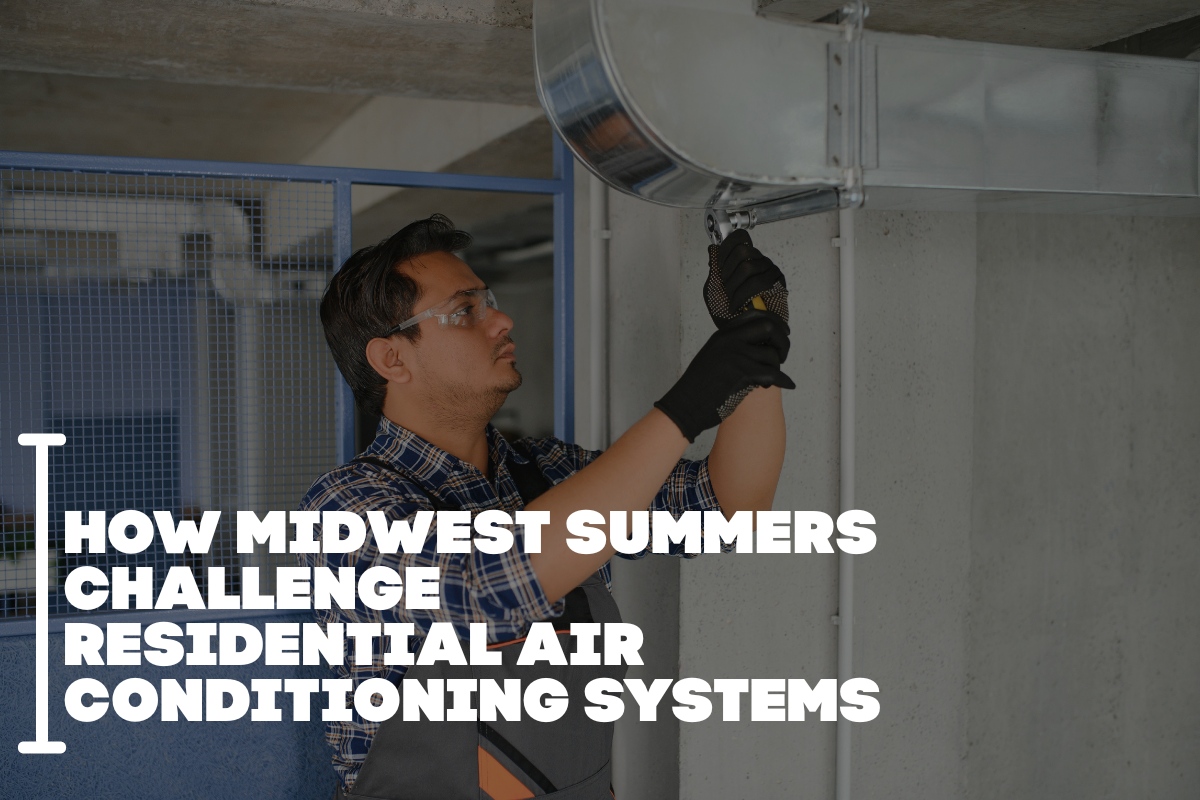
Summers in the Midwest are increasingly demanding for residential air conditioning systems. High temperatures, persistent humidity, sudden heat waves, and severe weather events all combine to push cooling equipment to its limits. For homeowners, these conditions often reveal weaknesses in system capacity, efficiency, and maintenance. Understanding how Midwest summers stress air conditioning systems helps homeowners prepare, reduce breakdown risks, and maintain indoor comfort.
Extreme Heat and Prolonged Heat Waves
Midwest summers are no longer defined by mild warmth alone. Extended heat waves with temperatures climbing well above average are becoming more common. During these periods, air conditioning systems must run for longer cycles with fewer opportunities to rest.
Continuous operation increases mechanical stress on compressors, motors, and electrical components. Systems that are undersized or aging may struggle to keep indoor temperatures stable, leading to uneven cooling and discomfort. Prolonged heat also accelerates wear, shortening the overall lifespan of the system.
High Humidity and Moisture Load
One of the most challenging aspects of Midwest summers is humidity. Regions across the Midwestern United States frequently experience high moisture levels that make indoor air feel warmer than the actual temperature. Air conditioning systems must work not only to cool the air but also to remove excess humidity.
This dual workload reduces efficiency and increases energy consumption. When systems are not designed or maintained to handle high humidity, homes may feel clammy even when thermostats are set low. Poor humidity control can also contribute to mold growth and reduced indoor air quality.
Increased Energy Demand and System Strain
Hot, humid summers lead to peak energy demand across the Midwest. As neighborhoods run air conditioners simultaneously, electrical grids are strained, and voltage fluctuations may occur. These conditions can affect system performance and place additional stress on electrical components.
Older systems are especially vulnerable during peak demand periods. Reduced efficiency and higher power draw can lead to overheating, tripped breakers, or sudden shutdowns during the hottest days, when cooling is most critical.
Airflow Challenges and Ductwork Limitations
Residential cooling systems rely on proper airflow to distribute conditioned air evenly. Midwest homes, particularly older ones, may have ductwork not designed for modern cooling demands. During summer, restricted or leaky ducts make it difficult to deliver cool air efficiently to all rooms.
Poor airflow forces air conditioning systems to work harder, increasing run times and reducing comfort. Upper floors often become significantly warmer, while lower levels remain cooler, creating inconsistent indoor temperatures throughout the home.
Impact of Severe Summer Storms
Midwest summers are also known for thunderstorms, high winds, and power outages. These events can disrupt air conditioning operation and damage outdoor condenser units through debris, flooding, or electrical surges.
Frequent power interruptions followed by sudden restarts place additional stress on compressors. Without proper surge protection or maintenance checks after storms, systems may experience hidden damage that leads to performance issues later in the season.
Aging Systems and Declining Performance
Many residential air conditioning systems in the Midwest are operating beyond their optimal lifespan. Aging systems lose efficiency, struggle with humidity control, and are more prone to breakdowns during peak summer conditions.
As temperatures rise, older systems may fail to keep pace, leading to longer cooling cycles, higher energy bills, and frequent service calls. Midwest summers often expose these limitations quickly, especially during the first major heat wave of the season.
Importance of Maintenance and System Readiness
Routine maintenance becomes especially important in a Midwest summer climate. Dirty coils, clogged filters, low refrigerant levels, and worn components all reduce cooling capacity. Small issues that go unnoticed in mild weather can cause major performance failures during extreme heat.
Proper maintenance ensures systems can handle both temperature and humidity demands efficiently. Homes with well-maintained systems experience more consistent comfort and fewer emergency breakdowns during summer.
FAQs
Why do Midwest summers feel harder on air conditioners than dry climates?
High humidity adds extra workload, forcing systems to remove moisture as well as heat, which reduces efficiency.
Can high humidity make my home feel warm even when the AC is running?
Yes, poor humidity control can cause indoor air to feel sticky and uncomfortable despite lower temperatures.
Do older air conditioning systems struggle more during Midwest summers?
Yes, aging systems often lack the efficiency and capacity needed for prolonged heat and humidity.
How do summer storms affect air conditioning systems?
Storms can cause power surges, debris damage, and flooding that stress or damage outdoor units and electrical components.
What can homeowners do to prepare AC systems for Midwest summers?
Regular maintenance, proper airflow, clean filters, and timely upgrades help systems perform reliably during extreme summer conditions.