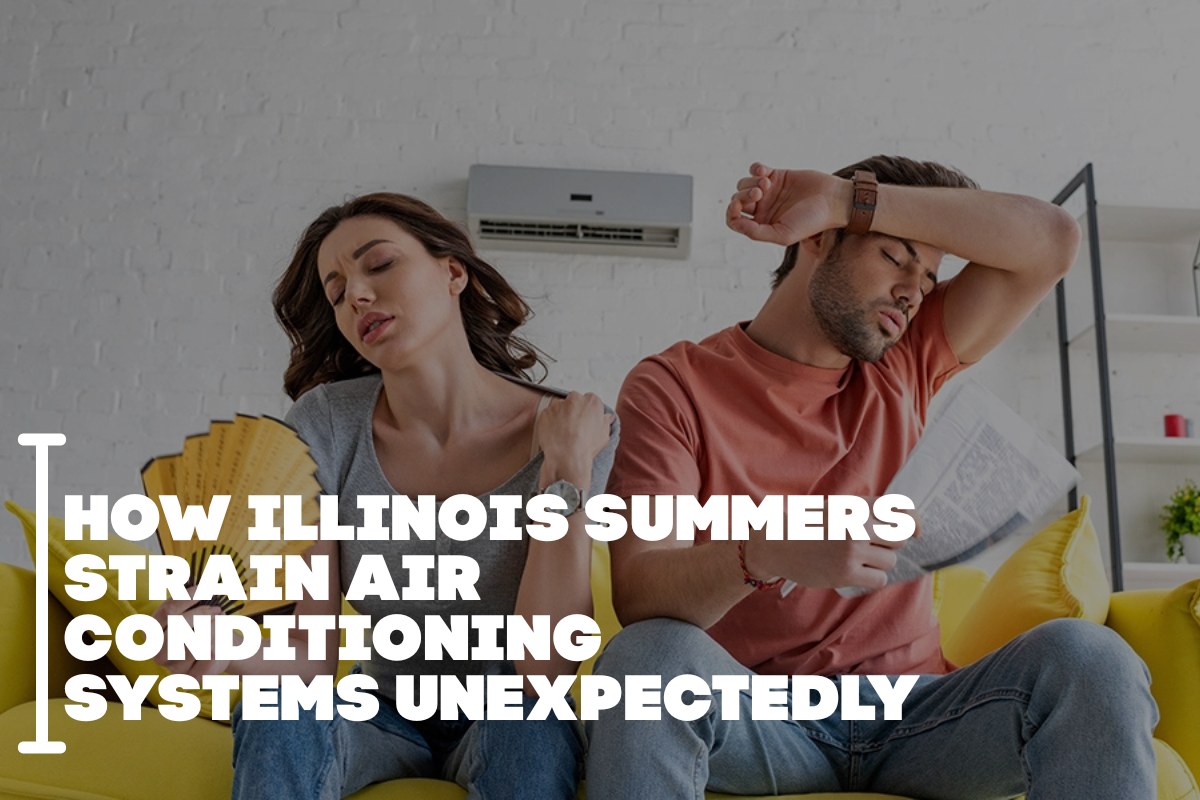
Illinois summers are often underestimated. While the state is better known for harsh winters, the summer months bring a unique combination of heat, humidity, storms, and environmental factors that quietly push air conditioning systems to their limits.
Many homeowners are caught off guard when their AC units struggle, break down, or lose efficiency during peak summer heat. Understanding why Illinois summers strain air conditioning systems can help homeowners prepare, reduce energy costs, and avoid sudden failures.
The Midwest Climate: More Than Just Heat
Unlike arid regions where heat is dry and predictable, Illinois experiences a humid continental climate. Summer temperatures frequently climb into the upper 80s and 90s, but it’s the moisture in the air that creates the biggest challenge for air conditioning systems.
Humidity forces AC units to work harder because they must remove both heat and moisture from indoor air. Even when temperatures aren’t extreme, high humidity levels can make homes feel warmer and increase cooling demand. As a result, systems often run longer cycles, accelerating wear on critical components such as compressors and blower motors.
Sudden Heat Waves and System Shock
Illinois summers are notorious for abrupt heat waves. A mild early summer can quickly turn into days or weeks of intense heat. This rapid change places unexpected stress on air conditioning systems that may not have been used heavily for months.
When an AC unit transitions suddenly from light use to constant operation, weak or aging components are more likely to fail. Capacitors, contactors, and electrical connections are especially vulnerable during these periods, leading to breakdowns that seem to come “out of nowhere.”
High Humidity and Reduced Efficiency
Humidity doesn’t just affect comfort—it directly impacts efficiency. Air conditioners remove moisture by condensing water on the evaporator coil. In Illinois, prolonged humid conditions can cause excessive condensation, leading to:
- Reduced cooling efficiency
- Frozen evaporator coils
- Increased risk of mold growth inside the system
When coils are constantly wet, airflow can become restricted, forcing the unit to run longer and consume more electricity. Homeowners may notice higher energy bills without a clear explanation, unaware that humidity is quietly reducing system performance.
Airborne Debris from Storms and Agriculture
Summer storms are common across Illinois, bringing strong winds, heavy rain, and debris. Outdoor AC units are particularly vulnerable during these events. Leaves, dirt, grass clippings, and even small branches can clog condenser coils, limiting heat transfer.
Additionally, Illinois’ agricultural landscape contributes pollen, dust, and fine particles to the air. These contaminants can quickly accumulate in air filters and coils, reducing airflow and forcing the system to work harder to maintain indoor temperatures.
Aging Infrastructure in Older Homes
Many Illinois homes—especially in suburban and urban areas—were built decades ago. Older ductwork, outdated insulation, and inefficient windows all increase the cooling load on air conditioning systems.
When cool air escapes through leaky ducts or poorly insulated attics, the AC must compensate by running longer. Over time, this extra workload accelerates mechanical wear, shortens system lifespan, and increases the likelihood of mid-summer failures.
Electrical Strain During Peak Demand
Illinois heat waves often coincide with peak electricity demand. As millions of air conditioners run simultaneously, voltage fluctuations and power surges become more common. These electrical inconsistencies can damage sensitive AC components, particularly circuit boards and capacitors.
In some cases, brief power outages followed by sudden restarts can be especially harmful. Repeated on-off cycles place stress on compressors, which are among the most expensive components to replace.
Poor Maintenance Revealed by Summer Stress
Many air conditioning problems don’t originate in summer—they’re exposed by it. Issues such as low refrigerant levels, dirty coils, or worn belts may go unnoticed during mild weather. When summer heat arrives, these small problems become major performance issues.
Illinois summers act as a stress test. Systems that haven’t received regular maintenance are far more likely to struggle, freeze up, or fail entirely during the hottest weeks of the year.
The Cost of Unexpected AC Strain
When air conditioning systems are pushed beyond their limits, homeowners often face:
- Emergency repair calls during peak pricing
- Higher monthly energy bills
- Reduced indoor comfort and poor air quality
- Shortened system lifespan
What feels like a sudden breakdown is often the result of months—or years—of gradual strain intensified by Illinois’ summer conditions.
Preparing for Illinois Summers
While Illinois summers are demanding, proactive steps can significantly reduce AC strain. Regular maintenance, timely filter changes, proper insulation, and keeping outdoor units clear of debris all help systems operate more efficiently. Small preventative measures taken before summer can prevent costly surprises when temperatures rise.
Frequently Asked Questions (FAQ)
Why does my AC struggle even when temperatures aren’t extremely high?
High humidity is often the culprit. In Illinois, moisture in the air forces your AC to work harder even at moderate temperatures, reducing efficiency and comfort.
How often should I service my air conditioner in Illinois?
At least once per year, ideally in spring before heavy summer use. Older systems or homes with pets may benefit from additional inspections.
Can storms really damage an air conditioning unit?
Yes. Storms can introduce debris, cause electrical surges, and lead to clogged condenser coils, all of which reduce performance or cause failures.
Why do my energy bills spike during Illinois summers?
Longer run times, high humidity, dirty filters, and duct leaks all contribute to increased energy consumption during summer months.
Is it normal for an AC to run constantly during a heat wave?
During extreme heat, longer run times are normal. However, constant operation without cooling improvement may indicate an underlying issue that needs attention.