Air conditioning systems work hardest during warm months, often running for hours each day to maintain indoor comfort. Without proper care, this constant operation can accelerate wear and reduce efficiency.
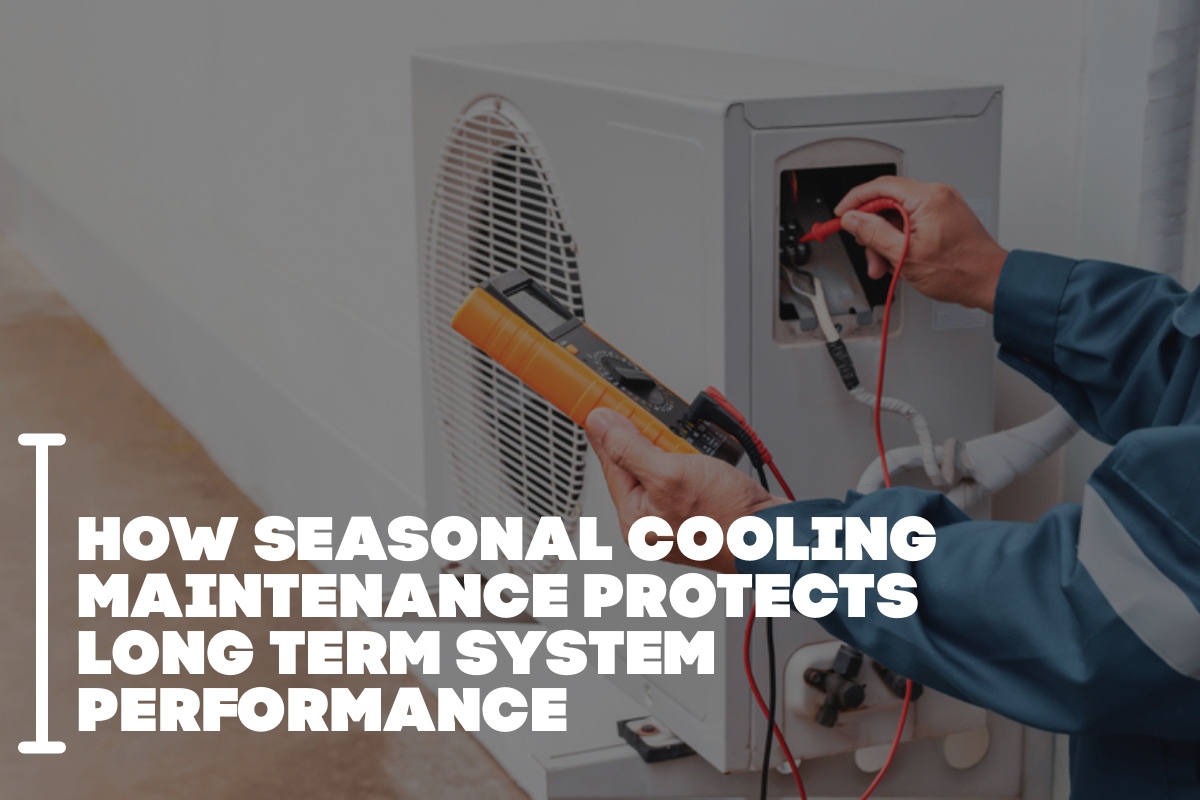
Seasonal cooling maintenance plays a critical role in protecting long-term system performance by preventing small issues from turning into costly failures, improving energy efficiency, and extending the lifespan of the equipment.
Preventing Wear and Tear Before It Escalates
Cooling systems are made up of multiple moving and electrical components that naturally experience wear over time. Seasonal maintenance allows technicians to inspect these parts before peak usage begins.
By tightening connections, lubricating moving parts, and identifying early signs of damage, maintenance prevents excessive strain on the system. Addressing minor issues early reduces the likelihood of major breakdowns during the hottest days, when systems are under maximum stress.
Maintaining Energy Efficiency Over Time
As air conditioners age, efficiency can decline if components become dirty or misaligned. Dust buildup on coils, clogged filters, and restricted airflow force the system to work harder to cool the same space.
Seasonal maintenance restores efficiency by cleaning critical components and ensuring proper airflow. When the system runs efficiently, it consumes less energy, reducing utility costs and slowing long-term performance degradation.
Protecting the Compressor and Major Components
The compressor is one of the most expensive and essential components of a cooling system. It relies on proper refrigerant levels, clean coils, and consistent airflow to function correctly.
Seasonal maintenance includes checking refrigerant pressure and inspecting electrical and mechanical systems that support the compressor. By maintaining optimal operating conditions, maintenance significantly reduces the risk of compressor failure, helping preserve the system’s overall longevity.
Improving System Reliability During Peak Demand
Cooling system failures are most common during periods of extreme heat, when demand is highest. Seasonal maintenance prepares the system for these conditions by ensuring all components are functioning as intended.
A well-maintained system is less likely to overheat, short cycle, or shut down unexpectedly. This reliability protects long-term performance by preventing repeated stress events that shorten equipment lifespan.
Supporting Consistent Indoor Comfort
Over time, neglected systems may struggle to maintain consistent temperatures. Uneven cooling, frequent cycling, or slow response can indicate declining performance.
Seasonal maintenance recalibrates thermostats, improves airflow balance, and ensures accurate temperature control. Consistent comfort reduces the need for excessive system operation, which in turn protects components from unnecessary wear.
Reducing the Risk of Moisture and Air Quality Issues
Cooling systems also manage indoor humidity. When maintenance is skipped, clogged drain lines or dirty components can lead to moisture buildup, mold growth, and reduced indoor air quality.
Seasonal inspections help keep condensate systems clear and filters clean. By maintaining proper moisture control, the system operates more efficiently and avoids secondary damage that can affect long-term performance.
Extending Equipment Lifespan
Air conditioning systems are a significant investment, and homeowners expect them to last many years. Seasonal maintenance is one of the most effective ways to maximize that lifespan.
Systems that receive regular care experience fewer major failures, maintain better efficiency, and operate under less strain. Over time, this consistent upkeep can add years to the system’s usable life.
Protecting Manufacturer Warranties
Many manufacturers require proof of regular maintenance to keep warranties valid. Skipping seasonal service can void coverage, leaving homeowners responsible for costly repairs.
By scheduling routine cooling maintenance, homeowners protect both system performance and warranty benefits, reducing long-term financial risk.
Long-Term Cost Savings Through Preventive Care
While seasonal maintenance has an upfront cost, it often results in significant long-term savings. Preventing breakdowns, reducing energy consumption, and delaying system replacement all contribute to lower overall ownership costs.
Preventive care is an investment in reliability, efficiency, and performance over the life of the system.
FAQs
How often should seasonal cooling maintenance be performed?
Cooling maintenance should be done once a year, ideally before the start of the warm season.
Can seasonal maintenance really extend system lifespan?
Yes. Regular maintenance reduces wear, prevents major failures, and helps systems operate efficiently for longer.
What happens if cooling maintenance is skipped?
Skipping maintenance increases the risk of breakdowns, higher energy bills, reduced comfort, and shortened system lifespan.
Is seasonal maintenance necessary for newer systems?
Absolutely. Even new systems benefit from maintenance to ensure proper setup, efficiency, and warranty protection.
Can homeowners handle seasonal cooling maintenance themselves?
Basic tasks like filter replacement can be done at home, but professional inspections are recommended for thorough and safe maintenance.