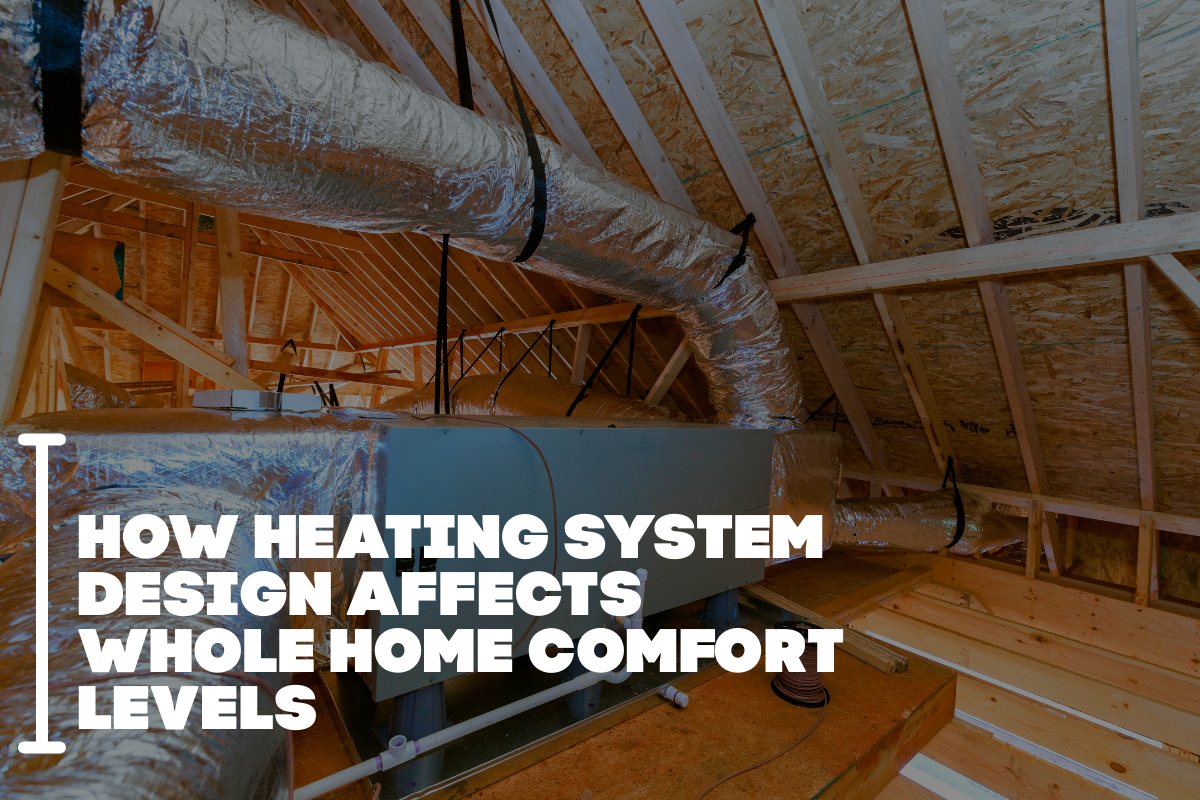
Heating systems do more than warm the air—they shape the overall comfort, efficiency, and livability of a home. The design of a heating system directly influences temperature consistency, indoor air quality, humidity balance, energy consumption, and even noise levels. A properly designed system distributes heat evenly and efficiently, while poor design can lead to cold spots, rising utility bills, and discomfort.
Understanding how heating system design affects whole-home comfort helps homeowners make informed installation and upgrade decisions.
Key Elements of Heating System Design
Heating system design involves more than selecting a furnace or boiler. It includes:
- System type selection (furnace, boiler, heat pump, radiant heating)
- Proper equipment sizing
- Ductwork or piping layout
- Insulation integration
- Thermostat placement and zoning
- Airflow and ventilation planning
Each element contributes to overall performance and comfort.
Types of Residential Heating Systems
Different systems provide comfort in different ways:
- Forced-Air Systems distribute heated air through ducts.
- Boiler and Radiator Systems circulate hot water or steam for radiant heat.
- Heat Pumps transfer heat from outside air or ground sources.
- Radiant Floor Heating warms surfaces directly for consistent comfort.
Each design impacts how heat is delivered and felt throughout the home.
The Importance of Proper System Sizing
One of the most critical design factors is proper sizing. Oversized or undersized systems reduce comfort and efficiency.
| System Size Issue | Impact on Comfort | Energy Efficiency Effect |
|---|---|---|
| Oversized System | Short cycling, uneven heating | Increased energy waste |
| Undersized System | Inadequate warmth during cold weather | Continuous operation, higher bills |
| Properly Sized System | Stable, consistent temperatures | Optimized efficiency |
Professional load calculations ensure appropriate sizing for the home’s square footage, insulation, and climate.
Ductwork and Airflow Distribution
In forced-air systems, duct design plays a major role in comfort. Poorly designed or leaking ducts can result in:
- Uneven heating between rooms
- Reduced airflow
- Increased energy consumption
- Excess dust circulation
Balanced duct systems ensure consistent air distribution and minimize hot or cold spots.
Zoning and Temperature Control
Modern heating designs often incorporate zoning systems that allow different areas of the home to be heated independently.
Benefits of zoning include:
- Customized comfort in each room
- Reduced energy waste
- Lower utility costs
- Improved temperature consistency
Strategic thermostat placement also ensures accurate temperature readings and better control.
Insulation and Building Envelope Integration
Heating system design must align with the home’s insulation and structural characteristics. Even the best heating system cannot compensate for poor insulation.
Design considerations include:
- Attic and wall insulation
- Window and door sealing
- Air leakage control
- Basement and crawl space insulation
A well-sealed building envelope enhances heating efficiency and indoor comfort.
Radiant vs. Forced-Air Comfort Differences
Radiant systems provide direct heat to surfaces and objects, creating a steady and even warmth. Forced-air systems heat air quickly but may create airflow drafts.
| Comfort Factor | Radiant Heating | Forced-Air Heating |
|---|---|---|
| Temperature Consistency | Even and steady | May vary by room |
| Air Movement | Minimal | Noticeable airflow |
| Noise Level | Quiet | Moderate fan noise |
| Humidity Impact | Less drying | Can dry indoor air |
Choosing the right system depends on homeowner preferences and climate conditions.
Energy Efficiency and Comfort Balance
A well-designed heating system balances comfort with efficiency. High-efficiency furnaces, smart thermostats, and variable-speed blowers improve:
- Temperature stability
- Energy savings
- Reduced system strain
- Long-term cost control
Smart systems adapt heating output to match actual demand.
Common Design Mistakes That Reduce Comfort
Poor heating system design may result from:
- Incorrect load calculations
- Inadequate duct sizing
- Poor thermostat placement
- Ignoring insulation upgrades
- Lack of zoning integration
Avoiding these mistakes ensures better performance and comfort.
Long-Term Benefits of Proper Heating Design
Investing in proper heating design offers several advantages:
- Improved whole-home comfort
- Lower energy costs
- Reduced equipment wear
- Increased property value
- Enhanced indoor air quality
Thoughtful design pays off in both comfort and cost savings.
FAQs
1. Why is heating system sizing important?
Proper sizing ensures stable temperatures, efficient operation, and reduced energy waste.
2. What causes uneven heating in a home?
Common causes include poor duct design, inadequate insulation, and lack of zoning.
3. Is radiant heating more comfortable than forced air?
Radiant heating often provides more even warmth, while forced air heats spaces more quickly.
4. Can heating system design affect energy bills?
Yes, poor design leads to inefficiency and higher operating costs.
5. Should insulation upgrades be considered during heating installation?
Absolutely. Proper insulation enhances system efficiency and improves overall comfort.